


The signal behind India’s uranium diplomacy
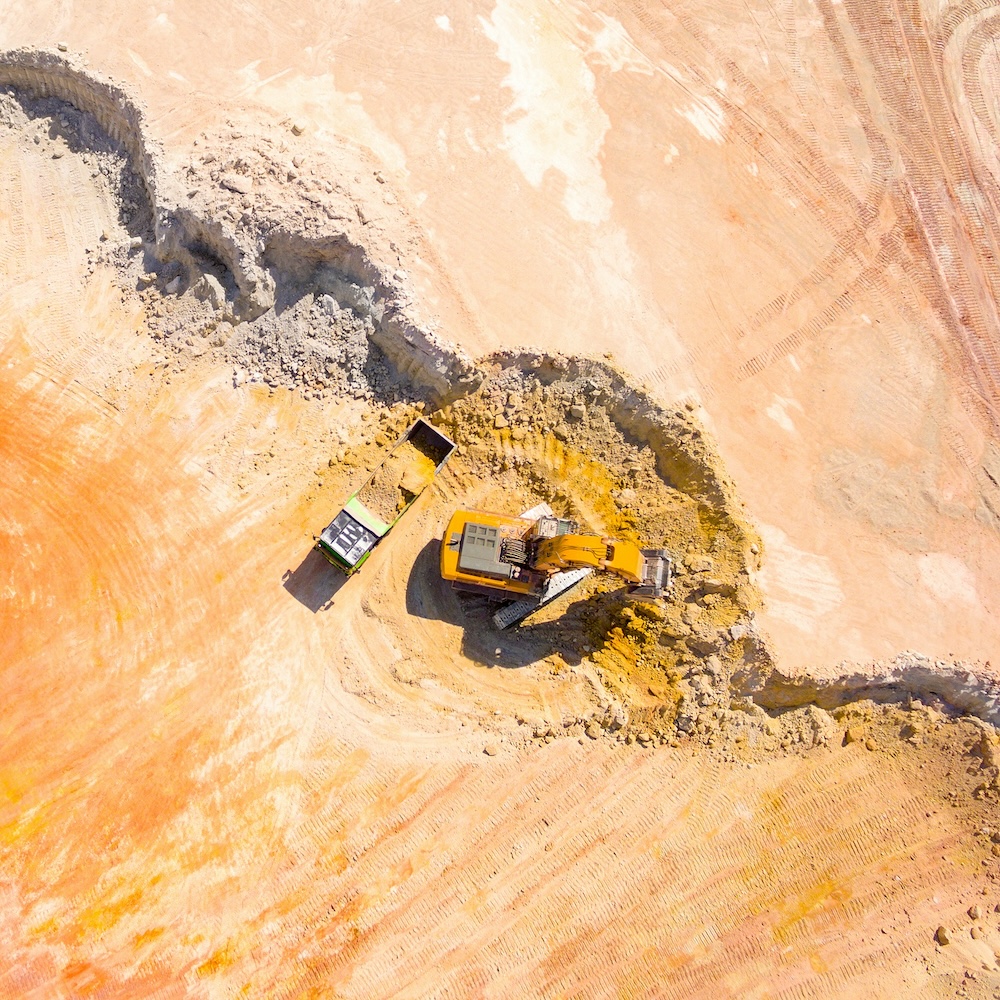
Most assessments of India’s ambition to reach 100 GW of nuclear capacity by 2047 focus on reactors: how many will be commissioned, which technologies will be selected, how projects will be financed and whether India’s regulatory and industrial systems can deliver at the required pace. These are necessary questions. But they overlook an earlier and [&hell
The uranium fuel chain: where the real constraint lies
Nuclear energy is attracting capital at a scale not seen in decades. Thirty-one countries have committed to tripling their nuclear capacity by 2050, with new countries pledging since governments across Europe, North America, and Asia are extending plant lifetimes, restarting mothballed reactors, and funding new builds. Hyperscalers are signing long-term powe

Nuclear and data centres: beyond the PPA
The commercial models being used to connect nuclear energy with hyperscaler demand are more complex than they appear to be and carry risks that neither side has fully priced. Between September 2024 and January 2026, the four largest technology companies by data centre scale, Alphabet, Amazon, Meta, and Microsoft, each signed agreements to access nuclear [&he
Nuclear financing in the new era
Something structural has changed in nuclear energy finance. Between 2020 and 2025, capital flows to nuclear power grew by 50 percent. They were on course to reach approximately $75 billion in 2025 alone, compared to a 2017–2023 annual average of around $50 billion and surpassed $80 billion by the end of 2025. On June 11, […]
What nuclear procurement and project delivery can learn from aerospace
The conventional explanation for nuclear power’s cost and schedule failures runs roughly as follows: nuclear is uniquely complex, burdened by regulation, politically contested in some regions, and too capital-intensive for private markets to bear. The implication is that the solution lies in regulatory simplification, public financing, and political wi
Nuclear energy and the industrial decarbonization imperative
Every credible net-zero pathway agrees on one thing: electricity must decarbonize. Wind, solar, and storage dominate the public conversation around the energy transition. They attract the majority of political attention, investment flows, and infrastructure planning. They are necessary. They are not sufficient. Because electricity is only part of the challen

Why nuclear desalination is the GCC’s most overlooked strategic asset
The global energy transition commands enormous attention, from boardrooms and parliaments to investment committees and international summits. Water security receives considerably less. That asymmetry is becoming difficult to justify. Water stress already affects large parts of the Middle East, North Africa, South Asia, and southern Europe. According to the W

Nuclear in a multi-technology energy system
For decades, nuclear energy has been assessed in isolation.The central question was whether to build it, with alternatives evaluated on cost, safety, and delivery. That framing is becoming increasingly outdated. As energy systems decarbonise, the challenge is no longer to choose between technologies. It is to make them work together. Nuclear now operates alo

The new geography of nuclear: energy security, supply chains and strategic autonomy
For most of its history, nuclear energy has been discussed through three familiar lenses: technology, safety, and financing. Reactor design, regulatory oversight, and project economics dominated conversations. That framework is no longer sufficient. What is increasingly reshaping nuclear today is geography, where critical materials originate, who controls ke

Why the next wave of electricity demand is a strategic issue for the nuclear industry
Electricity demand is entering a new phase. Not a gradual increase, not a cyclical rebound, but a structural shift driven by the rapid expansion of data centres and artificial intelligence workloads. For the nuclear industry, this evolution is not peripheral. It goes to the heart of how future capacity is planned, financed, regulated and integrated […