The uranium fuel chain: where the real constraint lies
Nuclear energy is attracting capital at a scale not seen in decades. Thirty-one countries have committed to tripling their nuclear capacity by 2050, with new countries pledging since governments across Europe, North America, and Asia are extending plant lifetimes, restarting mothballed reactors, and funding new builds. Hyperscalers are signing long-term power purchase agreements that give nuclear operators revenue certainty for the first time in a generation.
All of this requires uranium in far greater quantities than the world currently produces. And the industry’s planning, for the most part, has not kept pace with the ambition.
The fuel supply conversation has until recently concentrated on conversion: the step that transforms uranium oxide into uranium hexafluoride, ready for enrichment. Conversion capacity is tight, concentrated in a small number of facilities, and was structurally dependent on Russian supply chain that can no longer be treated as available. That concern is legitimate and pressing.
But conversion is a constraint with known solutions, and investment flows already addressing it. Uranium mining is a constraint of a different character: longer lead times, larger capital requirements, and decisions being made today, or not being made, that will determine what is available in the late 2030s and 2040s. The question worth asking now is not which step in the fuel chain is tight at this moment, but which constraint will prove harder to solve and on what timeline.
Where uranium supply stands today

As of today, 440 commercial reactors are operating globally with a combined net generating capacity of approximately 397 gigawatts electric, requiring around 68,000 tonnes of uranium per year. Global primary mine production does not cover that requirement and has not, for most of the past two decades. The gap between what mines produce and what reactors require is filled by secondary supplies: drawn-down inventories, recycled material, and the progressive downblending of highly enriched uranium from weapons programmes, available since the end of the Cold War. That buffer is finite, and the assumption that it will remain available at scale is increasingly strained.
Kazakhstan produces approximately 40 percent of global uranium output and remains in a category of its own. Kazatomprom’s production rose ten percent in 2024 to 23,270 tU, with further increases planned as the company returns to 100 percent of its subsoil use agreements for the first time since 2018. Canada, through Cameco’s Cigar Lake and McArthur River operations, and Namibia are the next largest producers by volume. However, a large share of uranium from Namibia is being offtaken by Chinese utilities. Australia holds the world’s largest identified resource base, at 28 percent of the global total, but has not recently translated that resource position into top-tier production. Russia and Uzbekistan round out the significant producer group. Additional players, understanding the strategic aspect of covering uranium mining, are coming in such as the U.S. Between 2024 and 2025, the amount of U3O8 produced has more than tripled.
At current and near-term production rates, primary supply cannot scale at the speed implied by the nuclear capacity commitments now on the table. What primary production misses, secondary supply has historically covered. The question is whether that assumption still holds as demand scenarios expand.
What growth scenarios require
The OECD Nuclear Energy Agency and IAEA’s 2024 Red Book projects world nuclear capacity reaching 574 GWe by 2050 in the low-demand case and 900 GWe in the high-demand case, translating to annual uranium requirements of approximately 90,000 tU and 142,000 tU respectively. Against the 59,000 tU required today, the range implies a 50 to 140 percent increase in annual demand over 25 years.
The 31-country commitment made at COP28 to triple global nuclear capacity by 2050 would, if realised, push capacity toward approximately 1,200 GWe, beyond the Red Book’s high case, with uranium requirements scaling proportionally. Even the low scenario requires a significant expansion of primary production beyond current levels. The high case requires one of the most substantial expansions in the sector’s history.
The resource base is not the immediate concern. Identified recoverable resources stand at approximately 7.93 million tU, sufficient to supply all scenarios through 2050 and well beyond. But resources in the ground and production capacity are different things. The mines that will supply the global fleet in 2038 need to begin their development cycle now. Whether that cycle has started in earnest is the more pertinent question.
The conversion constraint
Uranium conversion, the process that converts U3O8 into UF6 ready for enrichment, is the fuel cycle step that has attracted the most concern in recent years, and with good reason. Current global conversion capacity stands at approximately 65,000 tU per year against projected demand reaching roughly 85,000 tU per year by 2030, a gap of around 31 percent at a moment when Western buyers are actively seeking alternatives to Russian-controlled capacity.
The response is underway.
In the United States, Solstice Advanced Materials’ Metropolis Works facility, formerly known as Converdyn, is projected to produce more than 10,000 tU of UF6 in 2026, approximately 20 percent above its planned 2024 output, following its 2023 restart and accumulation of over $2 billion in customer orders. New entrants are emerging: Uranium Refining and Conversion Corp received an NRC docket number in 2026, and FluxPoint Energy announced plans for the first wholly new US conversion facility in more than 70 years. Others, focussing more on alternative conversion processes such as Raven-Flint – fluorine-free process – are also positioning themselves, by being allowed into the DOE/NRIC LaunchPad program. European capacity is being expanded and reoriented. The conversion bottleneck is real, but it is an industrial infrastructure problem with a known solution set and an investment community now actively engaged with it.
The lead time for a conversion facility is measured in years, not decades.
High-assay low-enriched uranium, or HALEU, introduces a complication specific to advanced reactor designs. HALEU, enriched to between 10 and 20 percent U-235, compared with the 3 to 5 percent standard for conventional reactors and 5 to 10 percent for LEU+, is required by several small modular reactor designs now in development. As of mid-2025, Centrus Energy had produced just over 920 kilograms of HALEU from a demonstration cascade in Ohio, and no commercial-scale HALEU production exists outside Russia and China. A $900 million DOE contract with Centrus, finalised in 2026, is intended to establish the first meaningful domestic capacity. If SMR deployment scales as projected, HALEU supply will need to scale with it, adding pressure to both the conversion and enrichment steps for a subset of the fleet. To support this demand, URENCO has been working on deploying HALEU enrichment cascades, supported by the UK government. However, the challenge will be to deconvert HALEU at an industrial scale.
Mining has a different timeline
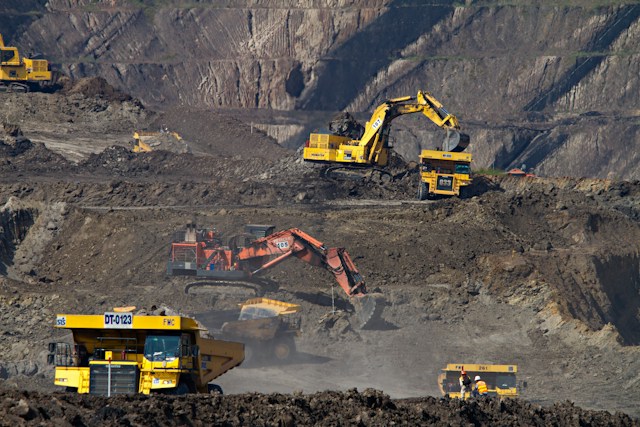
A major uranium mine takes ten to fifteen years from initial discovery, exploration and resource definition through permitting, environmental review, engineering, construction, and commissioning to reach sustained commercial production. This is not a policy choice or a bureaucratic delay. It reflects the physical reality of bringing a large, complex extraction project into operation in a regulated environment. It means that the mines needed to supply the global fleet in the mid-2030s must begin their development cycle no later than today.
The sector’s investment history does not inspire straightforward confidence on this point. Annual uranium exploration and mine development expenditures peaked at more than $1.5 billion before the post-Fukushima market downturn, fell to approximately $380 million in 2020, and had recovered only to an estimated $840 million in 2023. The investment cycle is now responding to the price signal, uranium spot prices have remained well above $80 per pound through much of 2025 and 2026, but the pipeline of projects advanced enough to enter production before 2035 is thinner than the demand scenarios require. Projects that were not in active development during the low-price years have lost between five and ten years of progress that cannot be recovered quickly.
The geographic concentration of production creates a further dimension of risk that market pricing does not fully capture. Kazakhstan alone accounts for over 40 percent of global supply, and Kazatomprom, state-controlled and subject to sulphuric acid logistics that constrained production through 2022 and 2023, is the single most consequential actor in global uranium supply. Canada and Namibia are the other significant production anchors. Australia, which holds the largest identified resource base, has been a relatively modest producer by volume. The implication is that geopolitical or operational disruption in one or two jurisdictions can materially affect global supply in a way that demand-side planning must account for.
The closed fuel cycle question
The theoretical case for reducing primary uranium demand through fuel recycling is compelling. In a fully closed fuel cycle, spent fuel from light-water reactors is reprocessed to separate residual uranium and plutonium, which are then fabricated into mixed-oxide fuel and returned to reactors. Sodium-cooled fast reactors can take this further, breeding additional fissile material from otherwise non-fissile U-238 and, in principle, extracting 60 to 100 times more energy from a given quantity of uranium ore than conventional reactors.
France is the only country that operates closed-cycle reprocessing at commercial scale. Orano’s La Hague plant processed approximately 1,130 tonnes of spent fuel in 2025. The plutonium recovered is fabricated into MOX fuel at the Melox plant, generating approximately 10 percent of French nuclear electricity and delivering raw material savings estimated at up to 25 percent compared with an open cycle. Russia operates reprocessing commercially at the RT-1 plant at Mayak. Japan’s Rokkasho reprocessing plant, after decades of delays, is moving toward commercial operation.
The global scale of reprocessing remains small. La Hague processes just over 1,000 tonnes per year in a world that produces approximately 10,500 tonnes of spent fuel annually across all operating reactors. Even a significant expansion of reprocessing capacity would not, within the 2030s, materially change the demand picture for primary uranium. The Red Book acknowledges the potential of advanced reactor and closed-cycle technologies but does not treat them as significant demand-reduction factors within its 2050 projection horizon.
The closed fuel cycle is a real long-term shift in nuclear fuel economics. It is not a near-term answer to the supply question being posed by the growth commitments of the 2020s. The organisations and governments treating recycling as a reason to delay investment in primary uranium supply are conflating a structural long-term trend with a near-term operational requirement.
The constraint that should concern the industry now
Conversion capacity will be expanded. The price signals are clear, the investment is moving, and the lead times are manageable. That step in the fuel chain will ease, unevenly, and with some difficult years in the interim, but it will ease. The same can be said for HALEU capacity, which is receiving focused government and private sector attention.
Uranium mining is a different problem. The mines that will supply the global fleet in 2038 need to be in active development now. Some of that investment is starting, exploration expenditure is recovering, and the price environment supports new project development. But the projects abandoned or deferred during the low-price years from 2014 to 2021 are not recoverable on the timelines that nuclear growth scenarios require. The pipeline of projects capable of reaching sustained production before 2035 is thinner than most demand projections assume.
Advanced reactor and closed-fuel-cycle technologies offer a genuine long-term restructuring of uranium economics. Fast reactors operating on recycled fuel would, at scale, dramatically reduce dependence on primary mine production. That transformation is worth pursuing and investing in. But it cannot materially alter the supply picture for the decade that matters most immediately, the 2030s, when the bulk of announced nuclear growth is scheduled to come online.
For the operators, investors, and governments driving the current wave of nuclear development, the practical implication is clear. The resource base is large enough. The identified geology is there. What is not yet there, in sufficient scale, is the sustained investment in mine development and the supply chain behind it. Conversion has the industry’s attention. Mining needs it more.
Related posts

Nuclear and data centres: beyond the PPA