

Decommissioning as a market
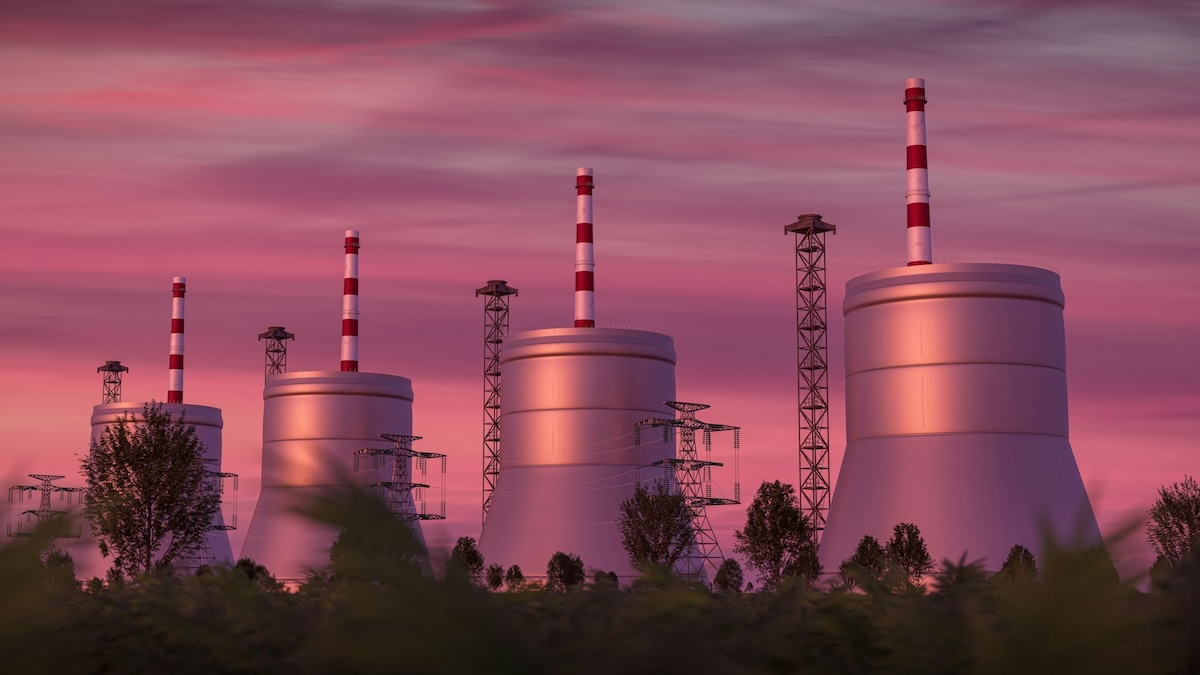
As of today, 226 nuclear reactors have been permanently shut down worldwide. Of those, more than 200 are in some stage of active decommissioning. Only 23 have been fully dismantled.
That gap, between the number of reactors that have stopped generating power and the number whose sites have been fully remediated, tells the central story of nuclear decommissioning. It is a decades-long, technically demanding, heavily regulated, and expensive process. The estimated global cost over the next four decades is approximately $500 billion.
Most organisations in the nuclear industry treat that figure as a liability. It sits on balance sheets, absorbs regulatory attention, and occupies the back pages of annual reports. The planning horizon for decommissioning is measured in generations, not business cycles. It does not attract the same commercial energy as new build.
That framing is understandable. It is also incomplete. Decommissioning is not only a liability. It is a market, large, complex, multi-decade, and structurally undersupplied with the advisory and commercial capability it needs to be executed well. The organisations that recognise this distinction early are positioning themselves ahead of a significant structural opportunity.
The scale of what is coming
The global nuclear decommissioning services market was valued at approximately $9.5 billion in 2025 and is projected to grow at a compound annual rate of between four and six per cent through 2034, reaching $19 billion then. These figures reflect only the near-term services market, the contracting, engineering, waste management, and project management work currently under procurement. They do not capture the full long-term value of the decommissioning pipeline, nor the advisory, commercial structuring, and workforce planning work that enables it.
The market’s geographic distribution is concentrated but shifting. Europe currently accounts for approximately 35 to 40 percent of global decommissioning revenues, driven by the UK’s legacy fleet managed by the Nuclear Decommissioning Authority and Germany’s post-Fukushima phase-out programme. The United States, with 41 permanently shut-down reactors the single largest national market. Asia, particularly Japan following Fukushima and South Korea’s ageing fleet, is an emerging decommissioning market of significant scale.
The UK provides the clearest illustration of both the magnitude and the complexity. The estimated cost of cleaning up the UK’s 17 civil nuclear sites managed by the NDA is £132 billion. The work is not expected to be completed for approximately 120 years. Sellafield alone, the largest nuclear site in Europe, has generated two major contracting packages in the last twelve months: a 15-year, £4.6 billion framework contract for high-hazard risk reduction work awarded in November 2025, and a further £2.9 billion in infrastructure support contracts awarded in October 2025.
A 15-year, £4.6 billion contract at a single site. That is not a liability management exercise. That is a market.
Why decommissioning has been treated as a problem, not an opportunity
The historical treatment of decommissioning as a cost to be managed rather than a market to be served reflects several structural features of how the nuclear industry developed.
Decommissioning funding was designed to be a regulatory obligation, not a commercial activity. In most jurisdictions, operators are required to set aside funds during the operating life of a reactor to cover future decommissioning costs. In the United States, combined nuclear decommissioning trust funds hold approximately $100 billion, with per-reactor cost estimates ranging from $280 million to $612 million. These funds are ring-fenced, regulated, and governed by strict rules about how they can be deployed. Regulatory framing and financial assurance, rather than commercial investment, have shaped how the industry thinks about the activity.
The timescales involved also work against commercial clarity. A reactor that shuts down today may not complete full site remediation for 40 to 80 years, depending on the strategy chosen. Operators must choose between immediate dismantling, a period of safe storage before dismantling, or long-term entombment, each with different cost, workforce, and regulatory profiles. The long duration compresses the incentive to plan strategically. Decisions taken today about site strategy, contracting approach, and workforce transition will define outcomes that no one currently in the room will see.
And the liability is real. In a transaction context, decommissioning obligations can represent a material, and frequently underestimated, component of asset value. In the UK, the Nuclear Liabilities Fund has seen estimated decommissioning costs nearly double since 2004. Across the global industry, the gap between pre-funded decommissioning reserves and total estimated obligations remains substantial. These are not theoretical risks. They are balance sheet exposures that affect credit ratings, transaction structures, and investor appetite.
Five components of the market
When decommissioning is approached as a market rather than a liability, five distinct commercial domains become visible. Each has its own supply chain, its own procurement logic, and its own set of organisations positioned to serve it.
- Strategy and programme planning. Before any physical work begins, an operator must make consequential decisions: which decommissioning strategy to adopt, how to sequence activities across a site or a fleet, how to structure the contracting model, and how to engage with regulators on the pathway to licence termination. These decisions have material cost consequences. An operator that optimises its decommissioning programme at the strategic level, rather than managing activities on a project-by-project basis, can significantly reduce total costs. Yet this is precisely the capability that is least well-served by the existing supply chain, which is predominantly oriented toward execution rather than planning.
- Engineering and dismantling contracting. The physical decommissioning work, reactor dismantling, contamination surveys, structural demolition, and site clearance, is delivered through large, long-duration contracts of the kind recently awarded at Sellafield. The market for these contracts is structurally oligopolistic: a small number of tier-one contractors have the nuclear-grade credentials, bonding capacity, and regulatory relationships to compete for major awards. The barriers to entry are high. The market opportunity for those inside the tier-one group is substantial.
- Radioactive waste management. Waste management is the most technically complex and commercially constrained element of decommissioning. The volume of radioactive material to be managed is large: at Sellafield alone, retrieving waste from legacy ponds and silos is a multi-decade programme requiring specialised robotics, remote handling systems, and processing capacity. Up to 90 percent of non-radioactive materials at a nuclear plant, metals, concrete, and process equipment, can be recycled and reused after clearance surveys, creating a secondary materials economy within the decommissioning process. The gap between waste arisings and available disposal routes remains a constraint in most jurisdictions, particularly for intermediate and high-level waste categories.
- Workforce planning and knowledge transfer. Decommissioning is a labour-intensive activity at a moment when the nuclear workforce is under structural pressure. Nearly 40 percent of the global nuclear workforce is expected to retire within the next decade. A March 2026 NSI report identified critical shortages in nuclear-qualified machinists, welders, inspectors, nondestructive examination specialists, and project managers, precisely the roles that decommissioning programmes require in volume. The workforce challenge in decommissioning is compounded by a knowledge transfer problem: the institutional memory of how a facility was built and operated, held by the people who built and operated it, must be captured before it is lost. This is not an HR function. It is a programme delivery risk.
- Site repurposing and community transition. What happens after a site is cleared is increasingly central to the planning and funding of decommissioning programmes. A decommissioned nuclear site is a piece of infrastructure, typically well-located, with existing grid connections, road access, and a history of managing complex industrial activities. The potential for reuse ranges from industrial parks to renewable energy installations to small modular reactor deployments. In Argentina, the Malargüe uranium processing complex, closed in 1986 and remediated over decades, was transformed into Parque El Mirador, a community green space co-designed with local residents. In the UK, Dounreay’s decommissioning programme has included comprehensive workforce retraining to stabilise the regional economy through the transition. The commercial question for site repurposing is not simply what the land is worth. It is who controls the planning process, how quickly regulatory oversight can be lifted, and whether the local authority and community have been engaged as partners rather than managed as stakeholders.
The five domains of decommissioning, strategy, contracting, waste, workforce, and site are each large enough to sustain a market. Together, they define a commercial ecosystem that the nuclear industry has only partially built.
What is structurally undersupplied
The physical execution capacity for nuclear decommissioning, from engineering contractors and specialist robotics companies to waste processing facilities, has developed significantly over the past two decades. Where the market remains thin is in the advisory and commercial structuring capability that enables programme owners to make better decisions about what to procure, how to sequence it, and how to structure the contracts through which they procure it.
Programme owners are often well-equipped to manage regulatory relationships and site operations. They are less consistently well-equipped to design and run sophisticated commercial procurement processes for multi-billion-pound, multi-decade programmes. The contracting models that best allocate risk between owner and contractor in a decommissioning context, where scope is uncertain, timescales are long, and cost estimation is inherently difficult, are not as well established as, say, contracts for new-build nuclear or offshore wind, which have become standardised through decades of transactional experience.
The workforce market also remains fragmented. The demand signal for decommissioning skills is growing, driven by the number of reactors entering the decommissioning process, the long duration of individual programmes, and competition for the same talent pool from new-build, life-extension, and advanced-reactor projects. But the planning and development of that workforce is rarely treated as a strategic function with its own investment logic. It is more often managed reactively, project by project, rather than as a sector-wide capability challenge requiring a coordinated response.
What the organisations doing it well are doing differently

The organisations capturing value in the decommissioning market share several characteristics that distinguish them from those that do not.
They plan at the programme level, not the project level. A utility managing a fleet of ageing reactors has more options available to it if it plans its decommissioning programme as a whole, sequencing sites, pooling procurement, standardising approaches, than if it treats each site as an independent problem. Fleet decommissioning programmes benefit from learning curve effects, shared contracting infrastructure, and the ability to develop and retain specialised workforce capability across multiple projects rather than building and dispersing it each time.
They invest in commercial structuring before contracting. The choice of contracting model whether to use target cost, fixed price, alliance, or framework arrangements has a larger impact on programme outcomes than most operators recognise at the point of procurement. The same physical scope, contracted differently, can produce radically different cost and schedule outcomes. Organisations that invest in commercial structuring expertise before they go to market are better positioned to design contracts that align contractor incentives with programme outcomes and that provide the flexibility needed to manage scope uncertainty over long delivery periods.
They treat site repurposing as a value driver, not an afterthought. Decommissioning costs can be substantially reduced when future site use is identified and planned early. A site being remediated to industrial brownfield standards rather than full greenfield has lower clean-up costs; a site with a credible reuse plan attracts stronger community engagement and reduced regulatory friction. The most effective decommissioning programmes embed site strategy from the outset, rather than treating it as something to be resolved after the technical work is done.
The window
The decommissioning market is in an early phase of maturation in some key countries. Even with Plant Life Extension, the volume of reactors entering the process will keep growing. The contract sizes are increasing. The regulatory frameworks governing decommissioning are, in most jurisdictions, evolving toward greater commercial sophistication in programme structuring and procurement. The workforce challenge is creating demand for new kinds of planning capability. And the question of what happens to nuclear sites after their operational lives is beginning to attract the attention of investors, local authorities, and energy planners who had not previously considered decommissioning their problem.
The organisations that will define the decommissioning market, as programme managers, commercial advisors, contracting specialists, and site developers, are making their moves now. The capital is beginning to follow. The supply chain is beginning to consolidate. The competitive positions that will matter in this market in 2035 are being established in 2025 and 2026.
$500 billion is a large number. What matters is who captures the value within it and how well they have prepared.
Related posts

Nuclear and data centres: beyond the PPA